
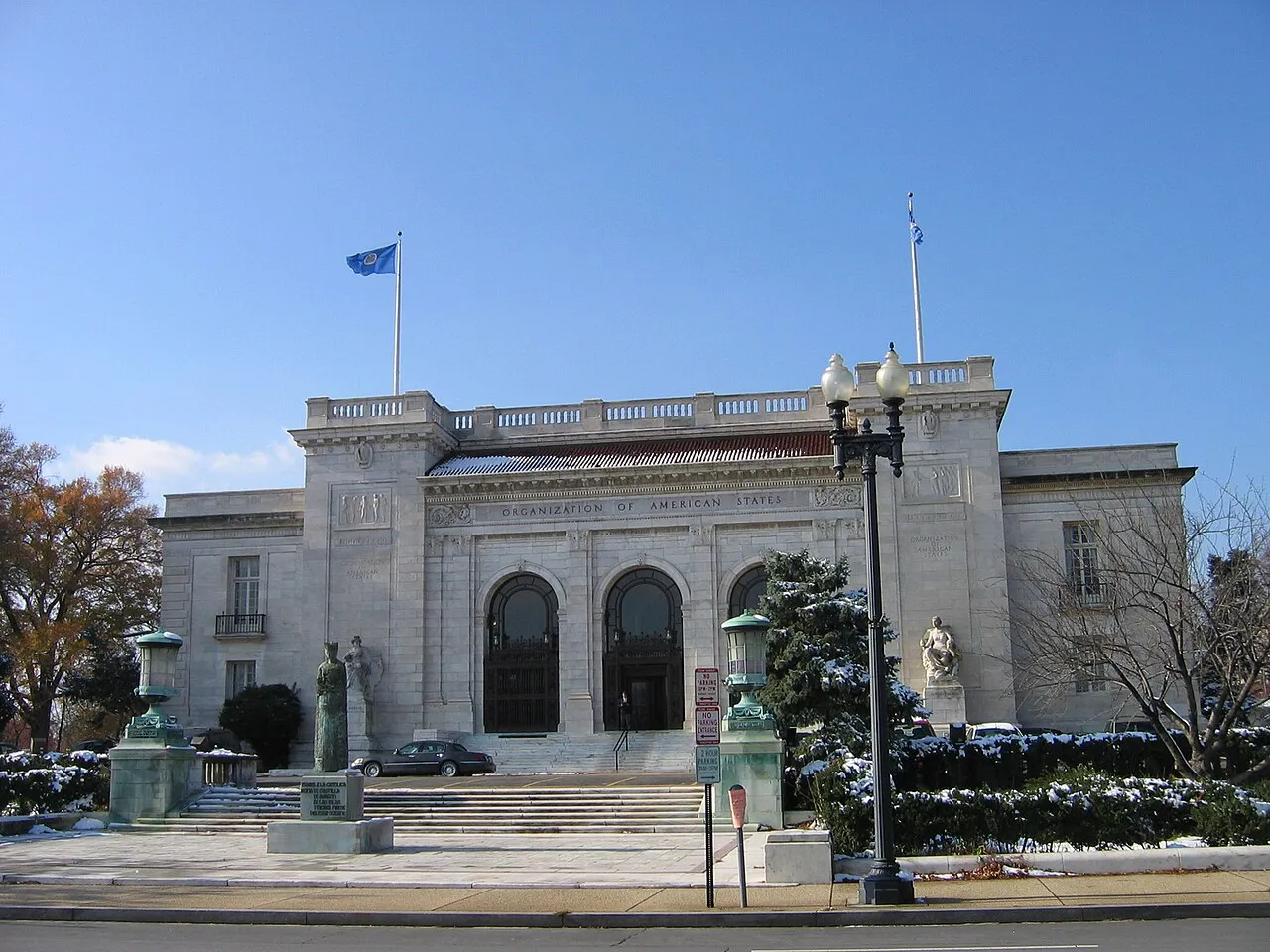
The group of ten countries that the Organization of American States (OAS) set up to look for a political way out of Nicaragua's crisis has used up half its time without a single public gesture from Managua. The first 30-day window closed this month, and the maximum set in the resolution — 60 days from its approval on 2 October 2026 — runs out in early December.
Ten countries and a clock
The Ministerial Follow-up Group was formed on 3 November 2026 by Argentina, Brazil, Canada, Chile, Colombia, Costa Rica, Dominica, Paraguay, Peru and the United States. Its task is to seek "swift and direct" dialogue with the government of Daniel Ortega and Rosario Murillo and, when the time is up, to bring recommendations to the Meeting of Consultation of Ministers of Foreign Affairs.
Those recommendations, under the resolution, may cover only diplomatic and legal action grounded in the OAS Charter, the Inter-American Democratic Charter and human rights instruments: the use of force is ruled out.
So far no one in the group has reported a concrete step or any sign of an opening from Managua.
What the group is asking for
The list of demands attached to the mandate is familiar and has not changed: release of political prisoners, an end to what the opposition describes as a police state, reversal of the strippings of nationality, return of confiscated property and guarantees for free elections with opposition candidates on the ballot.
The trigger: "there will be no more elections"
The OAS moved after Ortega said, on 19 July 2026, that there would be no more elections in Nicaragua. His government then pushed through a constitutional reform barring candidacies by those it deems "traitors to the homeland" — a category that in practice covers his opponents.
The underlying obstacle is that Ortega and Murillo do not recognise the organisation, which is why the analysts consulted take it for granted that the delegation will not even be let into the country.
The analysts' doubts
Carlos Murillo, a professor at the School of International Relations of the Universidad Nacional de Costa Rica (UNA, a Costa Rican public university), sees little room for the group to restore democracy or elections with opposition participation, and describes the Sandinista government as a "sultanic regime".
Félix Maradiaga, an opposition leader stripped of his nationality, argues that the presidential couple has used dialogue to buy time and does not keep its commitments; he calls for coordinated pressure, including a review of trade benefits and targeted sanctions.
Enrique Sáenz, an economist, Sandinista dissident and former member of parliament, sums it up by saying Ortega will not move "without real pressure". And he points to something that weakens the group from inside the region: apart from Costa Rica, no member of the Central American Integration System (SICA) joined. El Salvador, Honduras, Guatemala, the Dominican Republic and Panama — the immediate neighbours — are all missing, which leaves the group's weight resting on more distant partners and, above all, on the United States, in Sáenz's view the only one with real levers.
What comes next
Once the deadline expires, the group must put its recommendations to the foreign ministers. If Managua stays silent, the decision on what to do about Nicaragua goes back to the table that delegated it.
With information from Despacho 505 and EFE.